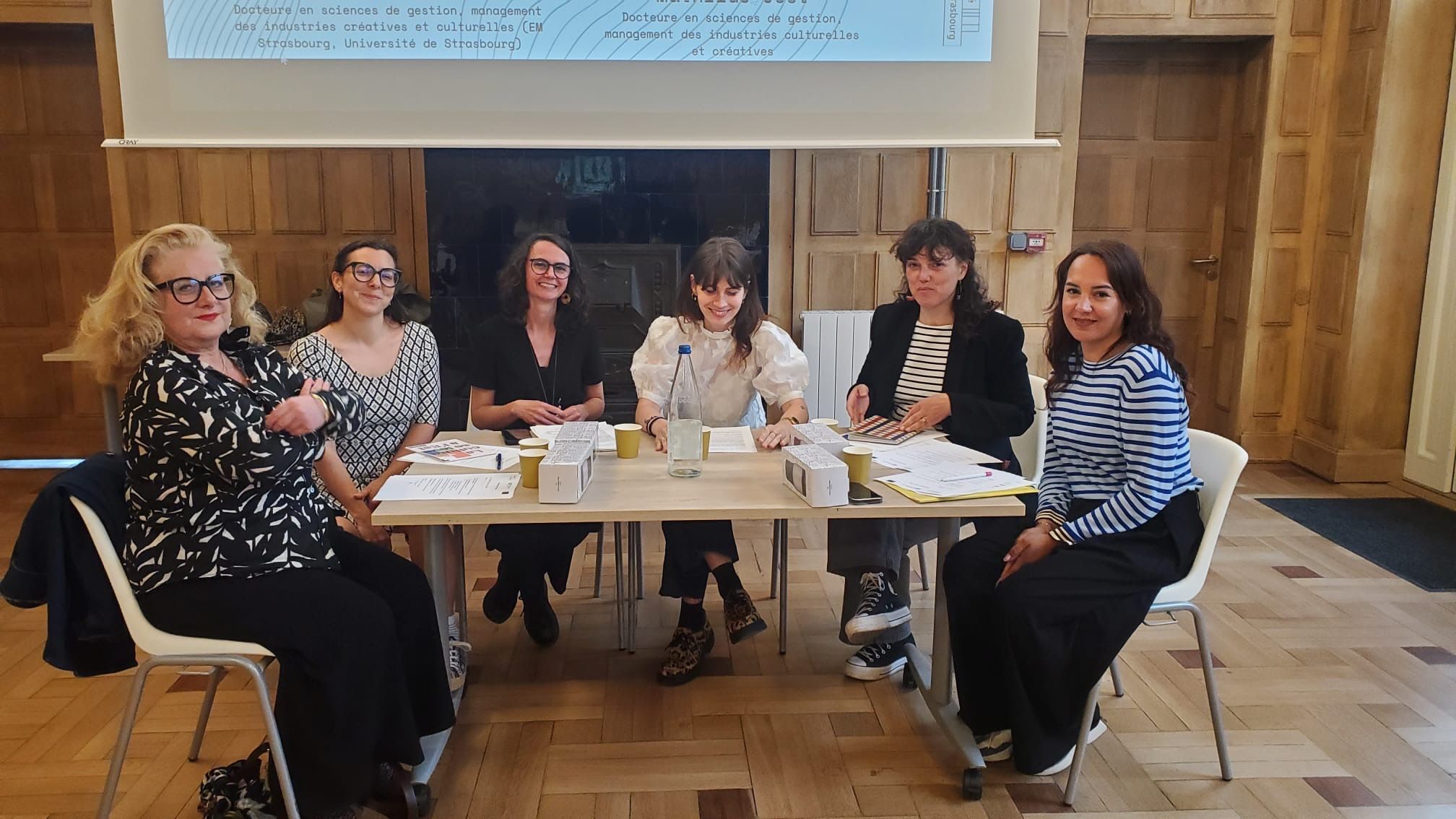


On May 4, 2026, the MAESTRO cluster at EM Strasbourg organized a workshop at Le Pixel in Strasbourg.
During the day, a roundtable discussion addressed a crucial question for the future of the cultural and creative industries: How can tomorrow’s cultural and artistic projects be funded?
Moderated by Mathilde Jost, PhD in management sciences, a specialist in cultural and creative industries management and Interreg project officer at the Région Grand Est, the discussion brought together speakers with complementary areas of expertise:
- Sadaf Zarer, Co-Director of Artenréel;
- Aïcha Chibatte, Director of the Au Grès du Jazz Festival;
- Sophie Ziessel, Director of POLI FONI and Founder of the Cool Choeurs Festival;
- Isabelle Boucher Doigneau, Grants and Sponsorship Officer, DRAC Grand Est;
- Amélie Boutinot, PhD in management sciences, specialist in cultural and creative industries management, EM Strasbourg, University of Strasbourg.
The roundtable brought together field experience, institutional support, and academic perspectives around several key ideas:
- The naturally hybrid nature of the cultural and creative industries, combining for-profit and nonprofit approaches with public and private resources, as well as artistic and local assets;
- The key role of cooperatives—such as Artenréel—in pooling resources, skills, and risks;
- Innovative pricing models, including flexible pricing—such as Les100ECS—the “pay what you want” model—such as Tënk—and cultural packages that bring together several artistic activities in a single offering—such as LaCoursiveBoutaric.
Another essential point was emphasized: cooperation cannot simply be decreed. It is built over time through trust, mutual understanding, and appropriate forms of support.
- To strengthen resource sharing and the hybrid nature of cultural activities, the business model serves as a key structuring tool. It helps define the project’s value proposition, partners, and sources of funding without compromising its mission or ethical principles.
Corporate sponsorship, which is still sometimes viewed with caution, was presented as a possible complementary resource—not as a replacement for public grants, but as a means of working alongside them.
The roundtable highlighted an important idea: beyond being economic responses, cooperation and hybridization are ways of shaping and strengthening local communities through the arts and culture.
Many thanks to all the speakers for their generous contributions, insightful feedback, and the quality of the discussions.